

WRITING THOUGHT EXPERIMENTS
Why I do it, and why you might enjoy it too.

Over the past three years, I’ve written over 200 thought experiments.
Why?
As well as being tried and tested tools of philosophy, thought experiments are ideal conversation starters1.
Thought experiments are short, engaging stories that invite the audience to participate imaginatively right away. Classic examples include ‘would you rather’ scenarios like The Trolley Problem and The Experience Machine.
Accompanied by questions, thought experiments open myriad avenues for discussion, very quickly. People can engage with them on various levels, whether they have knowledge of philosophy or not. Furthermore, they can become ‘co-authors’ by changing the parameters or adding in new characters2.
My regular meetup event, THOUGHT EXPERIMENTS IN PUBS (TEiP), uses thought experiments as a means of getting people into meaningful discussion immediately.
This concept for gathering resonated with people as soon as I put it on meetup.com in February 2023. Over 100 people showed up for the first event and generated a lot of enthusiasm for future editions. I realised that if we were to keep gathering in this way, we’d need an steady stream of thought experiments to fuel our conversations.
After a few months of using classical thought experiments, I started looking for fresh material. One participant generated 50 new thought experiments with ChatGPT, but they felt quite flat and one dimensional, all following a very similar formula. I found a book of contemporary thought experiments, but they were a little too jargon heavy and unwieldy for the vibe of our laid back evenings in the pub.
After adapting a few of these thought experiments to suit a pub setting,
I realised that it wasn’t so difficult to write my own.

After a few months of this kind of writing, I was hooked. This is why:
1. In order to write new material on new subjects each week, I had to diversify my media consumption.
Whenever I schedule a new TEiP event, I’m essentially setting myself creative homework. The event will have a theme, for example FREEDOM, HOPE, or AGE3. That theme will open a new tab in my mind. I’ll start noticing things related to it everywhere, and I’ll become more adventurous with my reading/watching/listening in pursuit of relevant material for thought experiments.
For example, after scheduling a recent event on PERSUASION, I read Jane Austen’s Persuasion, an article on business influencing, and a summary of How to Win Friends and Influence People. None of these would have been on my reading list without the ‘assignment’ to investigate PERSUASION.
Writing thought experiments invites new sources of information.


2. Writing TEs has given me a new, more curious, lens through which to look at the world.
I’ve started seeing everything as potential thought experiment fodder. Granted, I’ve loosened the criteria of what counts as a thought experiments quite a bit4. But now, I find myself being inspired by things like:
a conversation overheard in a cafe
an advert
a tricky interpersonal dilemma
a film that someone mentioned in passing
a random item on the news or a podcast
a niche topic that someone talked about at length at a dinner party
Whereas before, I might have tuned out if I wasn’t interested in something, I am now tuned in and have questions. I have become more curious, which has improved my experience of the world, and I think others’ experience of me. As I often say at TEiP events: “everyone loves a good listener”, and even more so, a curious listener.
Writing thought experiments cultivates curiosity.
3. I have created an imagining deadline for myself, as well as a writing deadline.
After reading and researching around a theme, I then have to digest, synthesise and imagine a thought experiment. My creative process involves letting my mind chew over my existing knowledge of a theme and the new information I’ve discovered, and seeing what images, voices, and concepts emerge. This often comes to me as dialogue between imaginary characters who voice different perspectives on a topic.
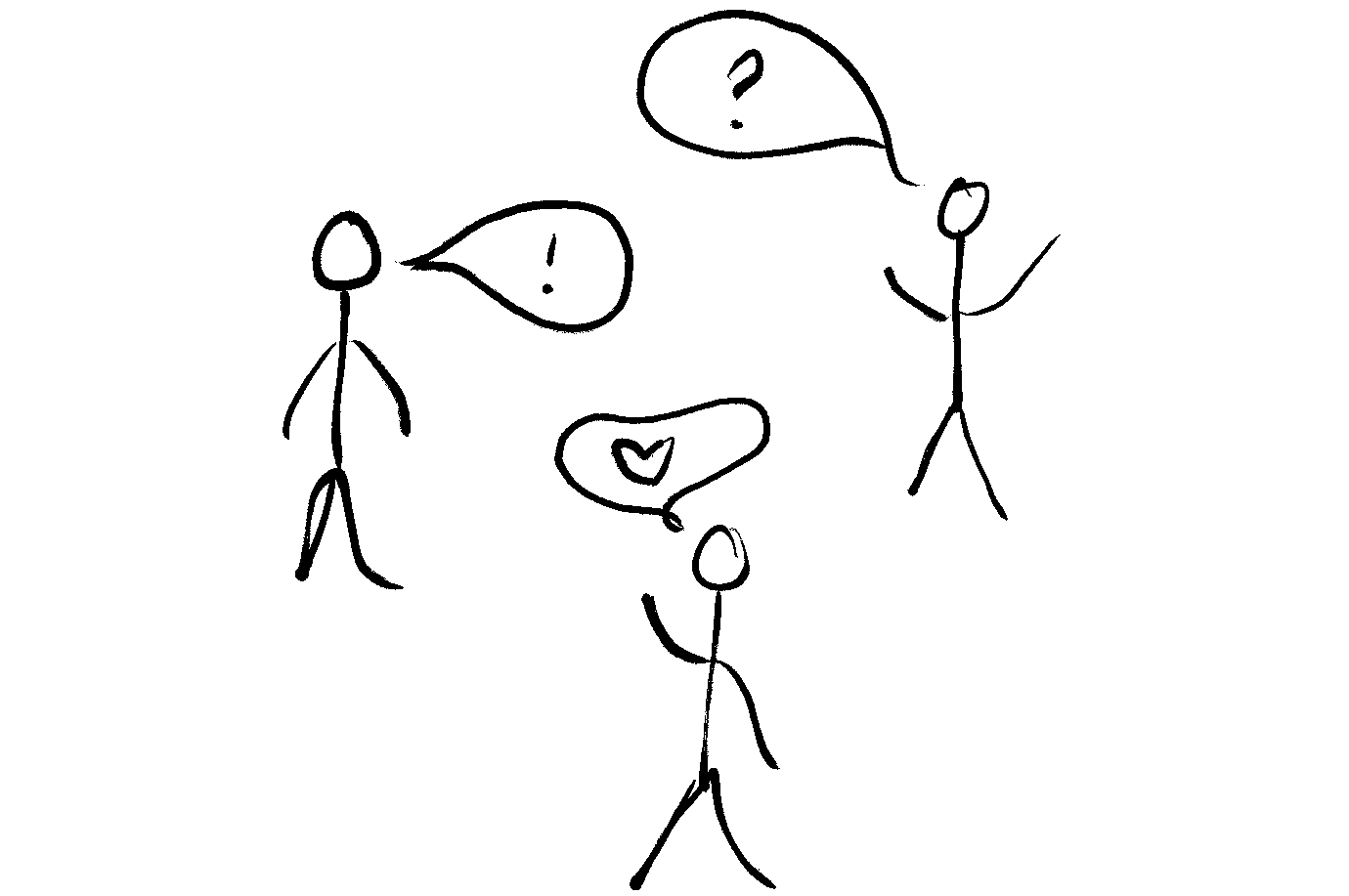
I like to have at least three voices in a thought experiment, to disrupt binaries and nuance the issues in question. I then work the thought experiment around these voices, situating them in a time, place, and context that adds to the thought-provoking-ness of the scenario.
This creative process has become a joyful, playful space that I look forward to (albeit still often procrastinate) and relish. It’s also become somewhere I can work out ideas that have lodged in my mind and need space to evolve.5
Writing thought experiments requires imagination and creativity, so you have to make space for both.
4. They are important, but not that important.
As a recovering perfectionist and veteran of academia, I have habits that make writing both slow and tedious. I can nit pick, overthink, and restructure ad infinitum. Since pulling a double all-nighter to finish my Masters thesis in 2016, I have bean loathe to put myself in the position of regular writing again. But it turns out that without a critical audience, and with a ‘yes and’ audience, writing becomes a LOT easier.
The purpose of my thought experiments is not to be groundbreaking or insightful or revolutionary, it is to get people thinking in a way that might lead them to their own eureka moments. And if not eureka moments, at least to get them thinking differently, collectively, and in dialogue with one another. This bar seems easy, and fun, to clear.
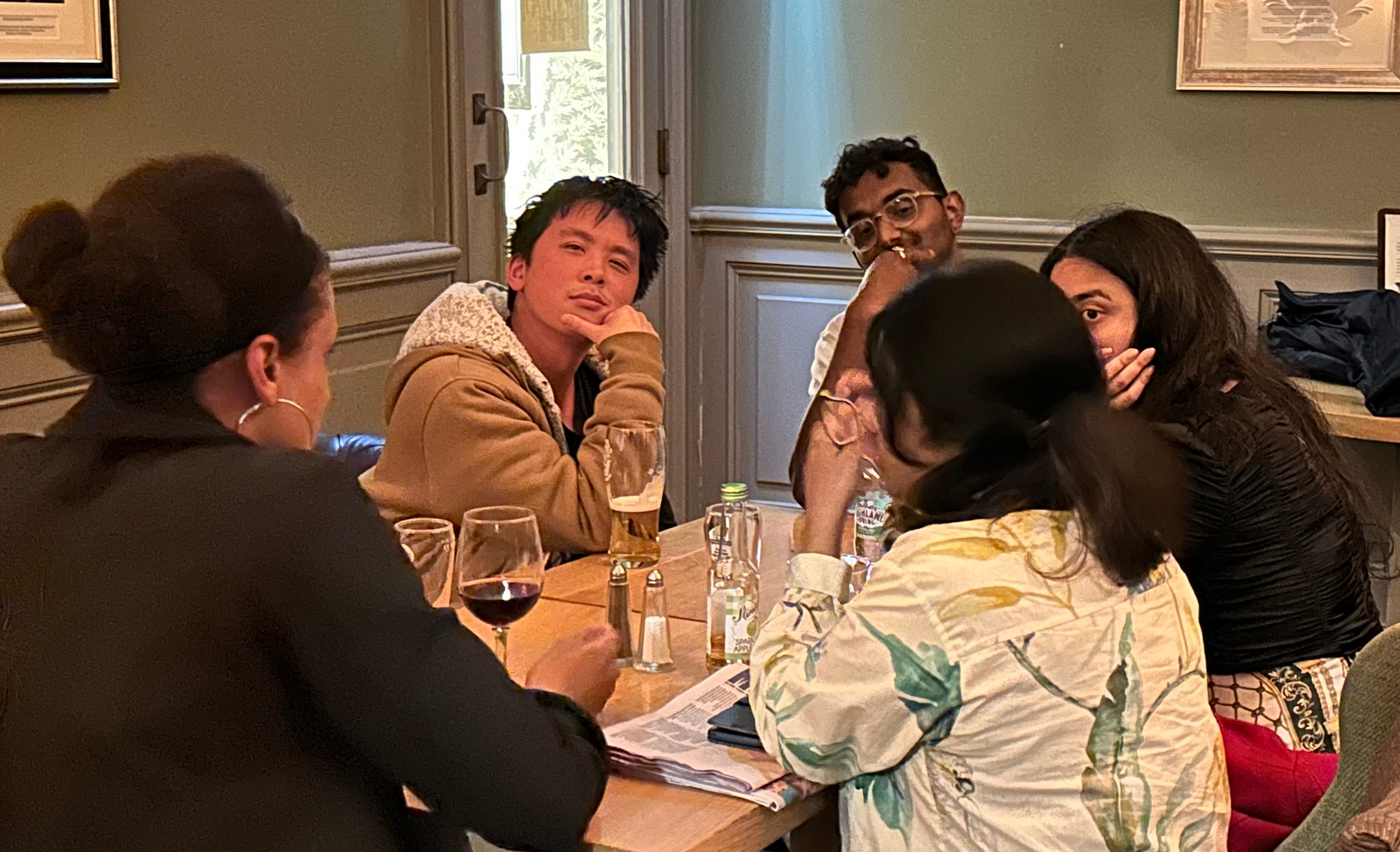
Churning out new thought experiments for multiple events a week, has unexpectedly been extremely rehabilitative. I don’t have time to be precious. I have leant into the joyful, creativity of writing in a way that I never have before. And I get to benefit from immediate, thoughtful feedback at events.
Writing thought experiments is playful.
I have found the fun in writing again. I don’t want to delegate it to AI.
Many people have suggested that I use AI to write thought experiments, to save me the work of coming up with new ideas every week, but while this might save me quite a lot of time, it would also rob me of one of my favourite ways of using my brain6.
Although all the reasons listed above compel me to write thought experiments, I am also sometimes lazy, sometimes busy, sometimes not in the right mood to write. Having the deadline of an upcoming event and the expectation of a ticket purchasing audience means that I have to override these reasons not to write and write anyway. And that is always a good thing. Much like going for a run, I never regret it, no matter how much I might procrastinate it.
If I delegated this work to AI once, it would always be an option in future, and I think that would quickly build dependency. Each time using AI would be like skipping a workout. My writing muscles would begin to wither and it would be more and more tempting to use AI the next time.
It is for the same reason that I have resisted repeating old thought experiments. If I started doing this, I would reduce my incentive to write fresh ones. I would halt the evolution of my thought experiment style, which has definitely improved and become more idiosyncratic over the years.
My compendium of human-written thought experiments continues to grow. I plan to publish it someday, but for now I’m just enjoying the practice.
And so are some of you! A few TEiP regulars have taken up the creative challenge and written innovative thought experiments on their respective areas of interest (e.g. belonging, race, money, AI, and courage). The first of these have gone down well at events and more are coming soon.
A few of you said that you had ideas you’d like to explore, but you weren’t sure how to go about writing your own thought experiments, so I ran a series of thought experiment writing workshops. They have been selling out far in advance, so I keep scheduling more.

If you’d like to join, you can find more info and register interest here:
In the meantime, if you’d like to join us in discussing thought experiments, you can find all upcoming events here:
And if you want to get some writing done, you might enjoy my other ‘meetup mashup’ where we write silently for an hour, and then intentionally ‘hang out’:
Thanks for reading, I’d love to hear your thoughts in the comments below or by DM.
Bonny ❤️
For future reflections and newsletters, please
I first started using thought experiments as conversation starters in prison, as I explain in this short interview.
The way I use thought experiments opens up discussion rather than narrowing it (more on that in a future post)
My criteria for a good thought experiment:
it gets you thinking/imagining/wondering differently
it invites audience participation by asking you to either inhabit a perspective, or consider several different perspectives (i.e. walk in different shoes)
it is short(ish) and easy to read
it is followed by a range of questions that invite thinking on different levels - abstract, personal, concrete examples, etc.
optional extra: it is humorous without being totally silly - it can include both light and dark subject matter
optional extra: it draws on and references current events, culture, art, music, film (etc.), in order to provoke curiosity and illustrate ideas
optional extra: it is evocative, painting a scene for you to really imagine and feel
there are a lot more optional extras, but that’s for another post.
I’ve recently started making sharing some of the thinking behind my thought experiments writing in short videos on our instagram: @thoughtexperimentsinpubs
Not to mention reduce the quality - I’m biased, but the ChatGPT thought experiments that I’ve read don’t provoke my thinking in the same way as human written ones.